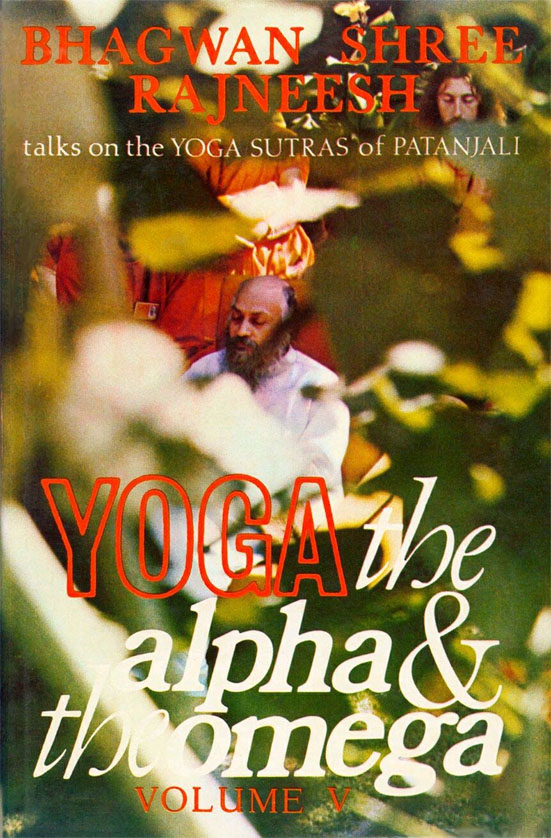
Yoga: The Alpha and the Omega, Vol 5
Discourses
Table of Contents
The bridegroom is waiting for you
The bridegroom is waiting for you. The soul waits for the union with the divine—like a bride for the groom. The bridegroom is waiting: existence is ready to merge with you—you're not ready. The beloved is patient—the lover must prepare. Don't keep Him waiting—prepare through awareness.
Where did we come from and how did we
Where did we come from and how did we. The origins of consciousness—how did the fall from unity happen? Where did we come from: not a historical question but an existential one. We fell through identification—consciousness identified with matter. The return is through disidentification. You came from the source; you return through awareness.
Awareness, not knowledge
Awareness, not knowledge. Patanjali distinguishes between knowledge and awareness. Awareness, not knowledge: knowledge is of the mind; awareness is of the being. Knowledge accumulates; awareness dissolves. Knowledge creates the knower; awareness dissolves the knower into the known. Patanjali's yoga is the path of awareness.
Because you are buddhas
Because you are buddhas. You are not becoming Buddhas—you ARE Buddhas. Because you are buddhas: the teaching is not about becoming but recognizing. The Buddha nature is already there—covered by ignorance. Remove the cover, not add something. You don't need to be made into a Buddha—you need to be uncovered.
The eight limbs of yoga
The eight limbs of yoga. Yama, niyama, asana, pranayama, pratyahara, dharana, dhyana, samadhi. The eight limbs: not eight steps but eight simultaneous aspects of one phenomenon. They're not sequential—they grow together. Like the petals of a flower, they open simultaneously. The first is morality; the last is ecstasy.
Does the universe love me?
Does the universe love me? The question of existence's relationship to the individual. Does the universe love me: the universe doesn't 'love' in a personal sense—it IS love. You're not separate from it—you're a part. The part is always loved by the whole. When you stop asking, you feel it.
Death and discipline
Death and discipline. The relationship between awareness of death and spiritual discipline. Death and discipline: the yogi uses death as a teacher, not an enemy. Awareness of death brings urgency without fear. Discipline means living each moment as if it's the last—but with total presence, not anxiety.
Male mind, female mind, no-mind
Male mind, female mind, no-mind. Three stages: the aggressive male, the receptive female, the transcendent no-mind. Male mind, female mind, no-mind: the mind has two modes—active and receptive. Beyond both is no-mind. The male conquers; the female receives; no-mind transcends both. Yoga leads from mind to no-mind.
The law is for you
The law is for you. Dharma is not against you—it's for you. The law is for you: the law of existence (dharma) is not a restriction but a support. Like a river's banks—they seem to restrict but they make the river flow. The law guides you to yourself. Don't fight the law—flow with it.
Not answers, no questions
Not answers, no questions. The ultimate state is beyond both questions and answers. Not answers, no questions: the mind seeks answers; the beyond has none. When questions dissolve, answers become irrelevant. The silence that remains is the answer that can't be spoken. Yoga leads to this silence.