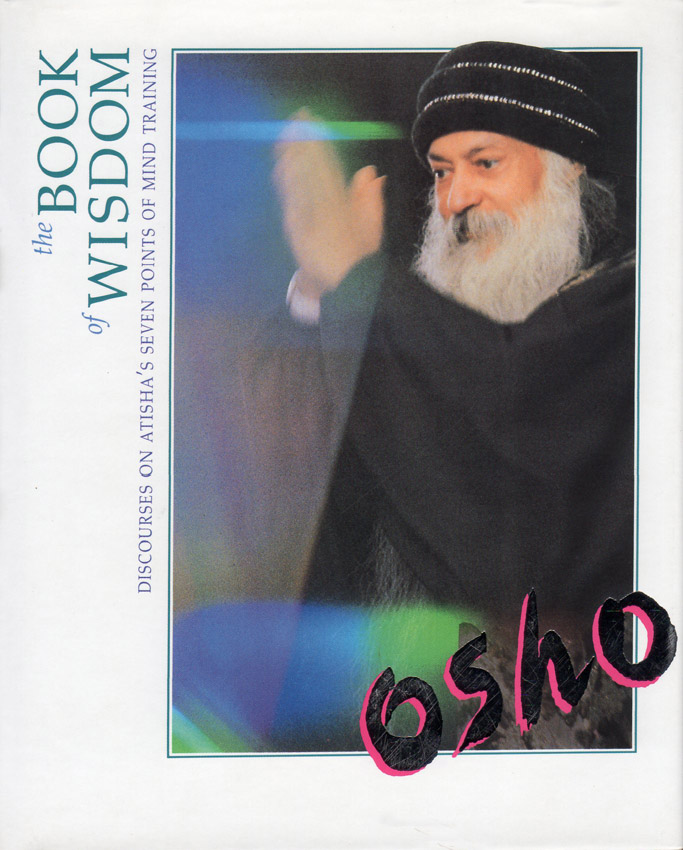
The Book of Wisdom
Discourses
Table of Contents
Atisha the Thrice Great
Atisha the Thrice Great. Atisha's mind-training—'First, learn the preliminaries. Think that all phenomena are like dreams.' Atisha the thrice great: the Bengali master who brought mind-training to Tibet. His seven points of mind-training. The first preliminary: all phenomena are like dreams—not real as they appear.
The Enlightenment of the Lily
The Enlightenment of the Lily. The lily is enlightened—it just blooms. The enlightenment of the lily: the lily doesn't try to be enlightened—it just blooms. Its enlightenment is its natural state. The sage is like the lily—enlightened by nature, not by effort.
Sitnalta and the Seventeen Chakras
Sitnalta and the Seventeen Chakras. The esoteric anatomy—chakras beyond the seven. Sitnalta and the seventeen chakras: beyond the seven commonly known chakras, there are more—seventeen energy centers. Sitnalta is the mythic maiden. The body is a universe of energy points. Atisha's preliminaries work through these.
The Last Chance to Rebel
The Last Chance to Rebel. Rebellion is the last chance—don't miss it. The last chance to rebel: the spiritual path is the last chance to rebel against the mechanical life. Don't conform—rebel. The sage is the ultimate rebel. Atisha: don't waste this human birth—rebel.
Sowing White Seeds
Sowing White Seeds. Plant the seeds of awareness—white, pure. Sowing white seeds: begin the development of taking with yourself. White seeds are pure intentions—awareness, compassion. Plant them in the soil of the mind. The harvest is enlightenment. Atisha: sow the seeds now.
Sannyas is for Lions
Sannyas is for Lions. The spiritual path is not for sheep—it's for lions. Sannyas is for lions: sannyas is not for the timid—it's for the courageous. Lions, not sheep. The lion roars—the sheep bleats. Atisha's training is for lions who dare to face the mind.
Learning the Knack
Learning the Knack. The path is a knack—not knowledge. Learning the knack: the spiritual path is not knowledge but knack—a feel, an intuition. You can't learn it from books—you catch it from the master. Atisha's preliminaries are the knack of awareness.
Krishnamurtis Solo Flute
Krishnamurtis Solo Flute. Krishnamurti—a solo flute, unique. Krishnamurti's solo flute: Krishnamurti was a solo flute—he didn't belong to any tradition. His music was his own. The master appreciates the unique—even if it's not his style. The solo flute plays its own song.
Watching the Watcher
Watching the Watcher. The ultimate meditation—watch the watcher. Watching the watcher: grasp the principle of two witnesses—the outer (others) and the inner (yourself). But ultimately, watch the watcher. The watcher watching itself is the dissolution of the watcher. Atisha: go to the root.
Miracles are your Birthright
Miracles are your Birthright. Not supernatural tricks—real miracles. Miracles are your birthright: not walking on water but transforming yourself. The real miracle is the change of consciousness. Atisha: your birthright is the miracle of enlightenment—claim it.
Expelled from the World
Expelled from the World. The sage is expelled—not by the world, by his own awakening. Expelled from the world: the sage doesn't leave the world—he's expelled by his own light. The world can't contain the awakened one. Atisha: the worldly will expel you—rejoice.
Buddha in the Supermarket
Buddha in the Supermarket. The sage in the marketplace—Buddha in the supermarket. Buddha in the supermarket: the sage doesn't live in a cave—he's in the supermarket. Enlightenment is not escape—it's presence everywhere. The Buddha buys groceries—each act is meditation.
Don't make Wicked Jokes
Don't make Wicked Jokes. Mind's humor is wicked—don't make it. Don't make wicked jokes: abandon poisoned food—the mind's wit is often cruel. Atisha: the spiritual person's humor is compassionate, not wicked. Poisoned food (cruel humor) poisons the mind—abandon it.
Other Gurus and Etceteranandas
Other Gurus and Etceteranandas. The marketplace of gurus—beware. Other gurus and etceteranandas: the world is full of gurus—most are false. Atisha: don't collect gurus—find the master. The real master doesn't sell—he gives. Etceteranandas are the many who claim but aren't.
The Smokeless Flame
The Smokeless Flame. The sage is a flame without smoke—pure. The smokeless flame: the mind is smoke; consciousness is flame. The sage is a smokeless flame—pure light without the smoke of desire. Atisha: become the smokeless flame. No smoke, no pollution—just light.
The University of Inner Alchemy
The University of Inner Alchemy. The master's commune—the inner university. The university of inner alchemy: the commune is not a place of outer learning but inner alchemy—transforming the lead of ego into the gold of consciousness. Atisha's training is the curriculum. The master is the dean of this university.
Wake up the Slave
Wake up the Slave. 'Don't seek sorrow for spurious comforts. All absorptions are effected in one. One method will correct all wrong—at the beginning and at the end of the path is this one method.' Wake up the slave: you're a slave to comforts—spurious, not real. Wake up! The one method is awareness—at the beginning and the end. Not many methods but one: witnessing.
Dropping out of the Olympics
Dropping out of the Olympics. Stop competing—the spiritual path is not a race. Dropping out of the Olympics: the ego turns everything into competition—even spirituality. 'I'm more evolved than you.' Drop out of the spiritual Olympics. The sage doesn't compete—he blooms. The lotus doesn't race the rose.
The three rung ladder of Love
The three rung ladder of Love. Three stages of love: need, giving, being. The three rung ladder of love: first rung—love as need (I need you). Second rung—love as giving (I give to you). Third rung—love as being (we are). The ladder goes from dependence to generosity to unity. Climb all three rungs—but don't stop at any.
Diogenes and the Dog
Diogenes and the Dog. Diogenes lived like a dog—free, shameless, wise. Diogenes and the dog: the cynic who was free from all social conditioning. He lived in a barrel, ate simple food, mocked the powerful. The dog doesn't pretend—neither did Diogenes. Wisdom is not respectability—it's freedom from pretense.
Vagabonds of the Soul
Vagabonds of the Soul. 'Train impartially in every area. Always meditate on specific objects. You should have no concern for other factors.' Vagabonds of the soul: the sage wanders—not homeless but home-full. Every place is home because home is within. Train impartially—don't prefer one area over another. The whole is your training ground.
The greatest Joke there is
The greatest Joke there is. Existence is the ultimate joke—enlightenment is getting it. The greatest joke there is: the cosmic joke is that you ARE what you seek. The seeker is the sought. The punchline is you. When you get the joke, you laugh forever. The Buddha laughed—the sage's enlightenment is the ultimate laughter.
Behind the Master's Hands
Behind the Master's Hands. What happens behind the master's visible actions. Behind the master's hands: the master's real work is invisible—behind the words, behind the gestures. What you see is the surface; what transforms you is the hidden. The master's hands are busy, but his being is still. Look behind the hands.
Bring in the New Man
Bring in the New Man. The new humanity—Zorba the Buddha. Bring in the new man: the old man is dead—he was divided, repressed, guilty. The new man is whole—body and soul, East and West, mind and no-mind. The new man doesn't renounce—he celebrates. He's the future: Zorba the Buddha.
We are Ancient Pilgrims
We are Ancient Pilgrims. The soul is ancient—traveling through many lives. We are ancient pilgrims: your consciousness is not new—it's ancient, traveled through countless forms. The pilgrimage is not in space but in consciousness. You're not a beginner—you're an old traveler on the path. Remember your ancientness.
The illogical Electron
The illogical Electron. The electron is both particle and wave—illogical. The illogical electron: modern physics discovered what mystics always knew—existence is illogical. The electron can't be pinned down—neither can truth. Logic is too small for reality. The mystic embraces the illogical because reality IS illogical. Beyond either/or is both/and.
The Soul is a Question
The Soul is a Question. The soul is not an answer—it's a question. The soul is a question: the soul doesn't answer—it questions. 'Who am I?' is the soul's voice. Answers satisfy the mind; questions nourish the soul. Don't seek answers—stay with the question. The question itself is the path. When the question becomes total, it dissolves into being.
Be a Joke unto Yourself
Be a Joke unto Yourself. The ultimate teaching—don't take yourself seriously. Be a joke unto yourself: the sage is his own joke. He doesn't take himself seriously—that's his wisdom. The ego is a joke—when you see it, you laugh. Be a joke unto yourself—laugh at your own seriousness. That laughter is enlightenment.