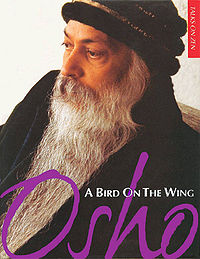
A Bird on the Wing
Discourses
Table of Contents
Empty Your Cup
Osho uses Nan-in's overflowing teacup to show that the mind—full of opinions—blocks truth. He goes further: break the cup entirely, accept suffering and fear rather than escape, and let existence pour into you through meditation, catharsis, and Sufi whirling.
No Mind, No Truth
A Zen master tells a seeker there is no mind and no truth to seek. Osho unpacks no-mind: the sky between thoughts is your nature, seeking itself is the barrier, and the master's "I don't understand" is the deepest answer—only unlearning opens the door.
The Gates of Heaven and Hell
Hakuin provokes a samurai into rage, then shows hell and heaven open in an instant of awareness. Osho reveals both as psychological, moment-to-moment states, and urges totality: only one who can open hell completely can open heaven's gate.
Have a Cup of Tea.
Joshu offers tea to stranger, friend, and manager alike. Osho explores freshness, non-judgment, and tea as Zen's sacred awareness—bridging the ordinary and divine so the profane becomes prayer and the master becomes mother.
Master of the New Monastery
A cook kicks a water jug and walks out, winning the mastership. Osho contrasts dead, premeditated answers with spontaneous action: meditation is not result-oriented but total response from no-mind, like a child—innocent, unmotivated, alive.
The Miracle of Ordinariness
Bankei's only miracle: when hungry, eat; when sleepy, sleep. Osho celebrates the miracle of ordinariness—allowing nature without the mind's interference—warning that mantra-power breeds ego, while surrendering manipulation restores the Garden of Eden.
The Severe Teacher
Master Ekido strikes a disciple who dies—yet ten become enlightened. Osho reveals the esoteric truth: a master can use the moment of death, when desire arises, to awaken the disciple forever; such compassion demands total surrender.
Zen Without Writing
A disciple thrusts a precious scripture into the fire. Osho shows truth cannot be written or borrowed; books are containers, not content. Burn the maps when you are the goal—seek your own authentic question, and the answer waits behind it.
Save the Cat
Nansen chops a cat when monks cannot speak from silence; Joshu saves it by putting shoes on his head. Osho unveils possessiveness as murder of the alive, and spontaneous no-mind action as the only savior; the cat's soul is eternal.
The Master of Silence
Buddha silently holds a flower; only Mahakashyap laughs—and receives the key. Osho traces the birth of Zen: truth transfers heart-to-heart beyond words, and silence that overflows becomes laughter, celebration, the proof of real meditation.
Sober Up
Monk Zuigan daily calls himself to alertness: "Sober up—don't be fooled!" Osho urges continuous mindfulness against society's hypnotic games, and tells of a chess match where imminent death births meditation and compassion—the two roots of a buddha.