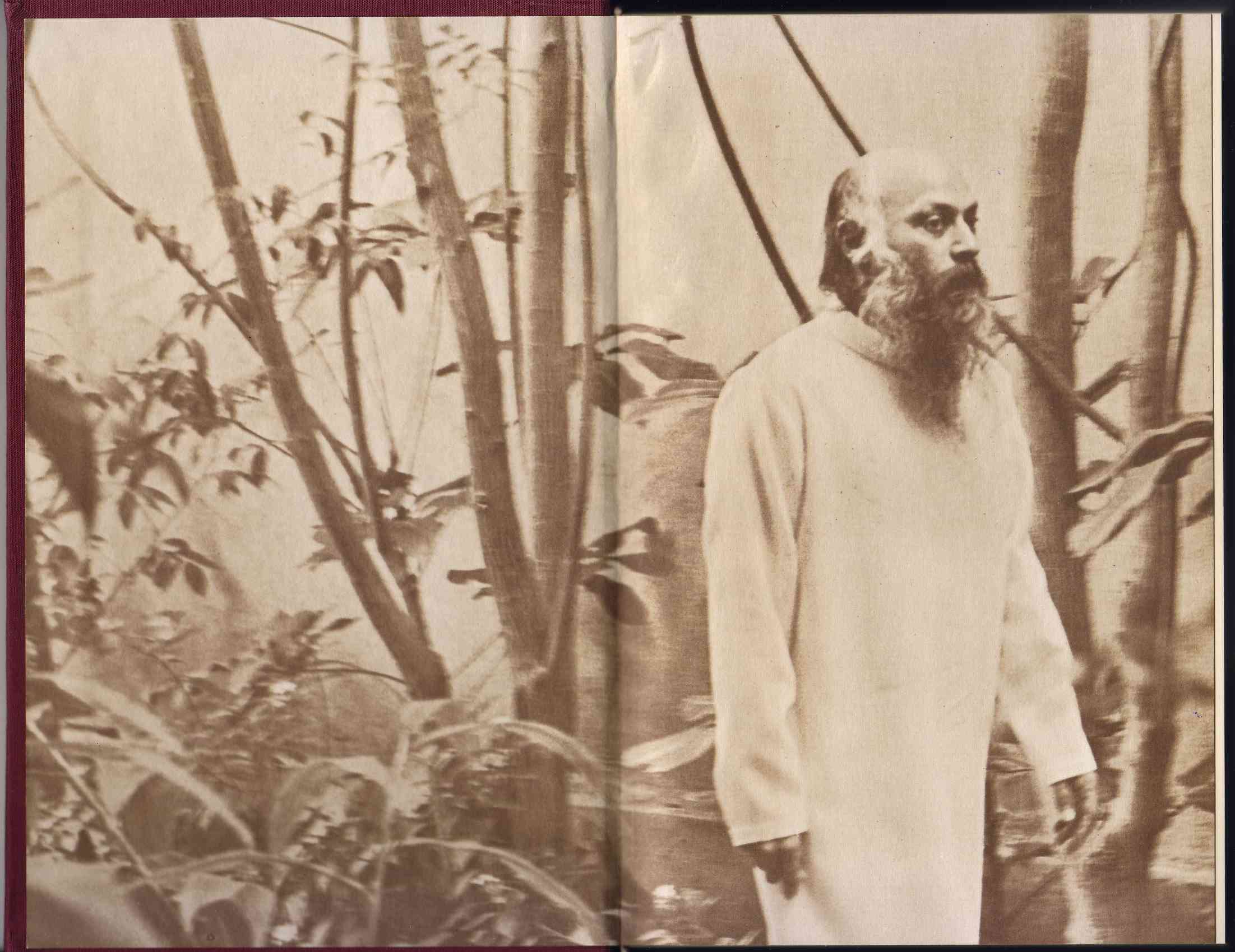
The Discipline of Transcendence, Vol 4
Discourses
Table of Contents
The Eightfold Way
The Eightfold Way. 'Those who follow the way are like warriors who fight single-handed with a multitude of foes. Some are faint-hearted, some go halfway, some are killed, some come home victorious.' The eightfold way: right view, right thought, right speech, right action, right livelihood, right effort, right awareness, right samadhi. Walk steadily, with a resolute heart. The way is a battle against your own ignorance.
Rich man's guru, poor man's guru
Rich man's guru, poor man's guru. The guru appears differently to the rich and the poor. Rich man's guru, poor man's guru: the master adapts to each disciple. The rich need to be taught detachment from wealth; the poor need to be taught dignity. The guru is not one thing to all—he's everything to each.
Remember the middle
Remember the middle. The middle path—neither indulgence nor suppression. Remember the middle: Buddha discovered the middle path. Not extreme asceticism, not extreme indulgence. The middle is not a fixed point—it's a dynamic balance. Like a tightrope walker, constantly adjusting. The middle is where awareness lives.
Let go of the branch
Let go of the branch. Like a monkey holding a branch, afraid to let go—the ego clings. Let go of the branch: the ego holds onto its identity like a monkey holds a branch over a chasm. The master says: let go. The fall is not into the chasm—it's into the vast. Let go and you find you can fly.
The discipline of transcendence
The discipline of transcendence. 'Make your hearts clean from the dirt of evil passions, and your conduct will be unimpeachable. Rare fortune to be born human, to see the enlightened, to have faith, to awaken intelligence.' The discipline of transcendence: clean the heart and conduct follows. Rare fortune to be on the path—don't waste it. Even if far away, remember the precepts.
Go on moving
Go on moving. The path is not a destination—it's a movement. Go on moving: the sage never stops. Not moving toward something—just moving. Like a river—always flowing, never arriving, never stopping. When you stop, you stagnate. Go on moving—the movement itself is the goal.
The ten grounds of the way
The ten grounds of the way. The bodhisattva's ten stages—from joy to cloud of dharma. The ten grounds of the way: each stage is a deepening of awareness. From joy (first ground) to the cloud of dharma (tenth). Not steps to climb but depths to sink into. The sage descends deeper into being while ascending higher in consciousness.
The disappearance of the magician
The disappearance of the magician. The ego is the magician—creating illusions. When seen through, the magician disappears. The disappearance of the magician: the ego creates the illusion of a separate self. When awareness shines, the magician is exposed—the magic was never real. The disappearance is not death—it's the discovery that nothing was there to disappear.
Provisions for the journey
Provisions for the journey. What to take on the spiritual journey? Provisions for the journey: awareness is the only provision. Everything else is baggage. The traveler who carries too much can't move. Travel light—just awareness. That's enough for the entire journey. The master provides the direction; awareness provides the food.
The bear of reason
The bear of reason. 'You are my favorite meditation. Do Buddhas mind being gazed on?' The bear of reason: reason is like a bear—strong but blind. It can hug you to death. The master says: don't reason about Buddhas—gaze. Reason analyzes; gazing merges. Three seconds of gazing does more than three years of reasoning.
Collecting pebbles on the seashore of life
Collecting pebbles on the seashore of life. Life is like a seashore—collecting pebbles. Collecting pebbles: the sutras are pebbles on the shore of the infinite ocean. The child collects pebbles; the sage dives for pearls. Don't collect pebbles—dive into the ocean. The discipline of transcendence ends with an invitation to dive.