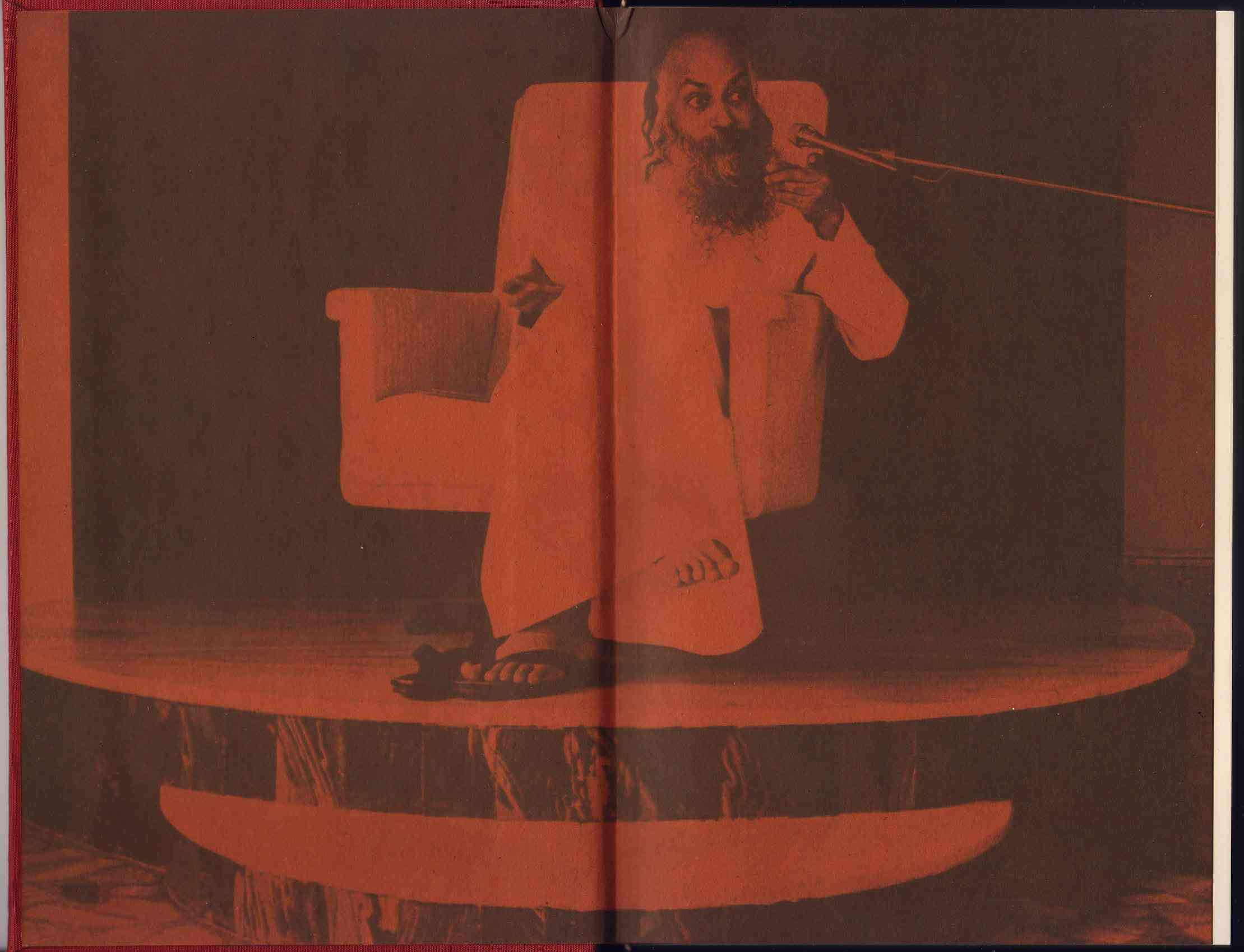
The Discipline of Transcendence, Vol 3
Discourses
Table of Contents
You Are Always on the Funeral Pyre
You Are Always on the Funeral Pyre. 'People seek fame and glory. When they acquire it, they're already old. It's like burning incense—the fire consumes the stick.' You are always on the funeral pyre: life is burning. Every moment the stick is shorter. Don't waste it on fame—use it for the Way. The honey on the knife's edge—sweet but dangerous.
Let There Be Prayer
Let There Be Prayer. 'Your lecture felt like a deep surgical operation. What do you transmit?' The words are toys—while you play with them, I work on your being. Let there be prayer: the master's transmission is not in words but in presence. Prayer is not asking—it's being available. The words are a decoy; the real work is in silence.
There Is Nothing Like Lust
There Is Nothing Like Lust. 'There is nothing like lust. But the thirst for truth is more powerful. Men addicted to passions are like a torch-carrier running against the wind.' There is nothing like lust: lust is the most powerful passion. But awareness is stronger. The Buddha rejected the fairy: 'What use have I for this leather bag filled with filth?'
Even Angels Don't Sing All the Time
Even Angels Don't Sing All the Time. 'Is modern psychology a religion?' No—psychology studies the mind; religion transcends it. Even angels don't sing all the time: psychology can prepare the ground but can't produce the crop. Psychology is about the mind; religion is about going beyond the mind. They can help each other but they're not the same.
Become a Driftwood
Become a Driftwood. 'Those following the way should behave like driftwood—not held by banks, not seized by men, not obstructed by gods, not in a whirlpool, not decaying—it will reach the ocean.' Become a driftwood: don't cling to banks, don't let others seize you, don't get stuck in whirlpools. Just drift—the ocean will receive you.
When Two Zeros Meet
When Two Zeros Meet. 'What is your view of being successful in ordinary life?' Neither for nor against. When two zeros meet: success brings misery because the desire for more never ends. The master is a zero—when you become a zero too, two zeros meet. In that meeting, nothing meets nothing—and that's the ultimate communion.
Just Working for Peanuts
Just Working for Peanuts. 'Monks should not see women. If they must, treat old ones as mothers, young ones as sisters.' Just working for peanuts: Buddha's advice is not about avoiding women but about transforming how you see them. The lotus is not defiled by mud. The mind that sees rightly sees all as family. Don't avoid—transform.
The Forbidden Path
The Forbidden Path. 'I yearn for the snake to become alive in me. Am I on a forbidden path?' No path is forbidden if walked with awareness. The forbidden path: tantra says nothing is forbidden—only unconsciousness is forbidden. The snake is kundalini—don't fear it. Walk with awareness and every path becomes the way.
Away with the Passions!
Away with the Passions! A man wanted to mutilate himself to control passions. Buddha: 'Better destroy your evil thoughts than harm your body. The mind is lord. When the lord is calmed, the servants yield.' Away with the passions: don't mutilate the body—transform the mind. Passions grow from will, will from thought. Calm both and passions vanish.
While I Am Here, Enjoy Me
While I Am Here, Enjoy Me. 'Aren't you laying the foundation of another organized religion?' While I am here, enjoy me: don't worry about the future. The future will take care of itself. The master says: don't think about what happens after—be here now. Organized religion happens when the master is gone. While I'm here, don't miss me.