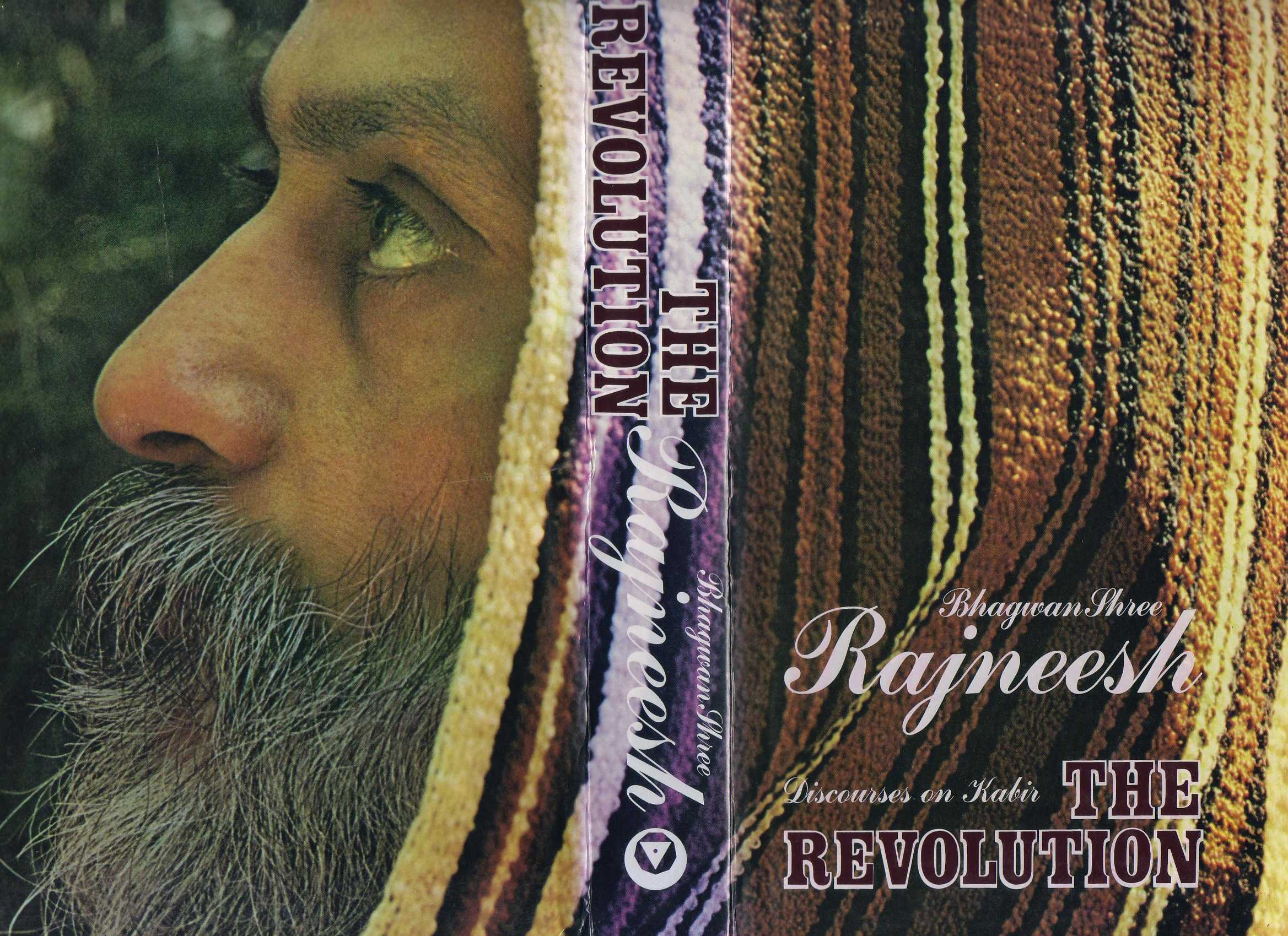
The Revolution
Discourses
Table of Contents
A Hand Beckoning
A Hand Beckoning. Kabir: 'There is nothing but water in the holy pools. The sacred books are nothing but words. The Shiva Linga is just a stone.' A hand beckoning: the revolution is not political but spiritual—overturning all borrowed beliefs. Kabir strips away all externals until only the direct experience remains.
The Stretched Soul Makes Music
The Stretched Soul Makes Music. 'I love and hate the same person—how to live with these polar opposites?' The idea of perfection is the root of all neurosis. The stretched soul makes music: like a violin string, the tension of opposites creates music. Don't try to resolve love and hate—let them stretch you into melody.
By A Fiery Intention
By A Fiery Intention. Kabir: 'Are you looking for me? I am in the next seat—your shoulder is against mine.' You won't find me in stupas, shrines, synagogues, cathedrals. By a fiery intention: the revolution is burning away all that is false. The beloved is in the next seat—don't look far.
Forth from your Caves
Forth from your Caves. 'Your unconditional acceptance comes to me for the first time.' The master's acceptance melts the ego's walls. Forth from your caves: come out of the caves of fear, self-rejection, conditioning. The revolution is accepting yourself unconditionally—then the universe accepts you.
The Pilgrims of Love
The Pilgrims of Love. Kabir: 'I talk to my inner lover—why such rush? There is some sort of spirit that loves birds and animals and the ants.' The pilgrims of love: love is the pilgrimage, love is the pilgrim, love is the destination. Don't rush—the spirit that loves the ants also loves you.
The Birth of the New
The Birth of the New. 'Why is growth painful?' You've been avoiding a thousand pains—they accumulate. Growth means facing them. The birth of the new: like birth itself, painful but creative. The new is born through the pain of facing repressed suffering. Don't bypass pain—go through it.
It is Time Now!
It is Time Now! Kabir: 'I know the sound of the ecstatic flute, but I don't know whose flute it is.' A lamp burns with neither wick nor oil. It is time now: the revolution happens now, not tomorrow. The flute plays—you just need to listen. The time is always now.
This Orange Epidemic
This Orange Epidemic. 'Is the guru-disciple relationship conditioning?' The master is not a person but a presence. There's no relationship—either you see it and dissolve, or you don't. This orange epidemic: sannyas is spreading like an epidemic—not through conversion but through contagion of being. The master doesn't create authority—he destroys it.
The Sword of Love-and-Death
The Sword of Love-and-Death. Kabir: 'Open the window to the west and disappear into the air inside you. Near your breastbone there is an open flower.' The sword of love-and-death: love kills the ego and births the soul. The flower at the breastbone is the heart chakra. Open the window—disappear into your own inner air.
Through These Enchanted Lands
Through These Enchanted Lands. 'Revolution is hot and sharp; love is soft and delicate—how do they go together?' Like man and woman, head and heart. Life consists of polar opposites—choosing one against the other makes you half. Through these enchanted lands: revolution and love together—the sword and the flower. The total human is both.