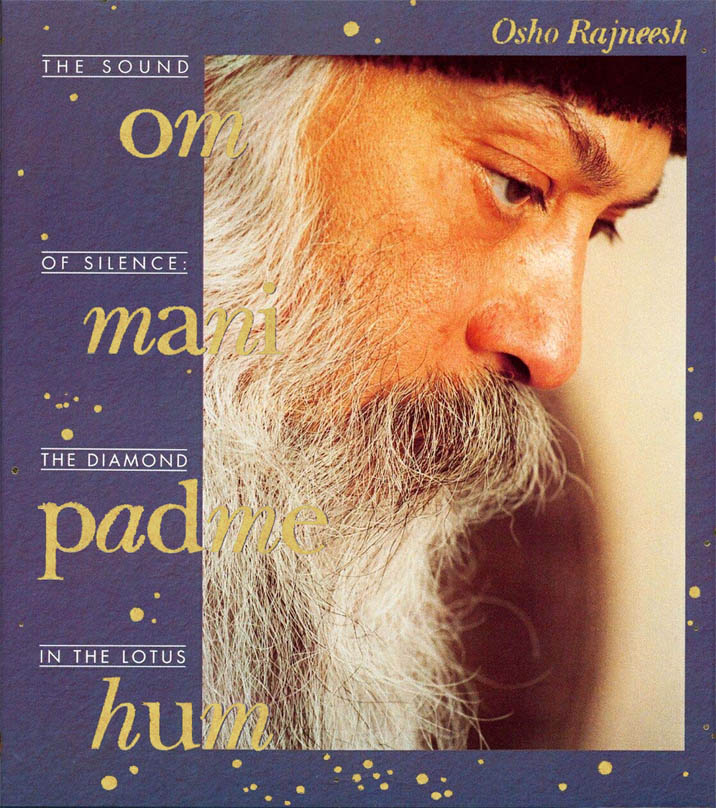
Om Mani Padme Hum
Discourses
Table of Contents
The music of OM
The music of OM. OM is the sound of existence. The music of OM: Om is the primal sound—the universe's music. Om Mani Padme Hum: the jewel in the lotus. OM is the sound of silence; the mantra is the bridge from sound to silence.
A very simple and humble affair
A very simple and humble affair. Meditation is simple—not complex. A very simple and humble affair: meditation is not grandiose—it's simple, humble. Om Mani Padme Hum: the lotus blooms humbly in the mud. The path is simple—don't complicate it.
This place is for innocence
This place is for innocence. The commune is for innocence—not sophistication. This place is for innocence: the master's commune is for innocence—not cleverness, not sophistication. Om Mani Padme Hum: the lotus is innocent; the jewel is pure. Be innocent.
Never meditate over something
Never meditate over something. Don't meditate ON something—just meditate. Never meditate over something: the master's heresy—don't meditate on an object. Om Mani Padme Hum: meditation is not about something—it IS. Drop the object; be the meditation.
Just to relax on the river
Just to relax on the river. Relax—like floating on a river. Just to relax on the river: the master's metaphor—the sage relaxes on the river of existence. Om Mani Padme Hum: don't swim—float. The river (existence) carries you. Relax.
Don't just accept: rejoice!
Don't just accept: rejoice! Not acceptance—rejoicing. Don't just accept: rejoice! acceptance is passive; rejoicing is active. Om Mani Padme Hum: don't just accept what is—rejoice in it. The lotus doesn't just accept the mud—it blooms from it.
Time to be completely disillusioned
Time to be completely disillusioned. Disillusion is good—be completely disillusioned. Time to be completely disillusioned: disillusionment is not depression—it's seeing through illusions. Om Mani Padme Hum: the jewel is found when illusions are dropped. Be disillusioned—then see.
Aha!
Aha! The sudden recognition—Aha! Aha! the sudden moment of understanding—the Aha! moment. Om Mani Padme Hum: the jewel is suddenly seen—the Aha! of enlightenment. Not gradual but sudden. Aha!
These games keep you retarded
These games keep you retarded. The mind's games—keep you retarded. These games keep you retarded: the mind's games (ego, comparison, judgment) keep you childish. Om Mani Padme Hum: drop the games—the lotus doesn't play games. It just blooms.
We disown our past
We disown our past. Don't carry the past—disown it. We disown our past: the master's teaching—disown the past. Om Mani Padme Hum: the lotus doesn't carry yesterday's mud. Each day is fresh. Disown the past—be in the present.
The very nature of things
The very nature of things. Things have their nature—don't force. The very nature of things: the sage sees the nature of things—doesn't force. Om Mani Padme Hum: the lotus blooms according to its nature. Don't force—let things be.
Existence has its own ways
Existence has its own ways. Existence knows—don't interfere. Existence has its own ways: the sage trusts existence's ways—doesn't interfere. Om Mani Padme Hum: the lotus trusts the sun, the water, the mud. Trust existence—it knows.
Reality is indivisible
Reality is indivisible. Reality is one—indivisible. Reality is indivisible: the sage sees the one in the many—reality is indivisible. Om Mani Padme Hum: the jewel and the lotus are one—not two. Don't divide the indivisible.
A rock among the waves
A rock among the waves. The sage is a rock—amidst the waves. A rock among the waves: the sage is a rock—the waves (life's turbulence) crash and pass. Om Mani Padme Hum: the rock (awareness) stays; the waves (thoughts) pass. Be the rock.
For no reason at all
For no reason at all. Joy for no reason—for no reason at all. For no reason at all: the sage's joy is causeless—for no reason at all. Om Mani Padme Hum: the lotus blooms for no reason—just because it's its nature. Joy for no reason.
The psychology of the buddhas
The psychology of the buddhas. Not Western psychology—Buddha psychology. The psychology of the buddhas: the master's psychology—based on awareness, not analysis. Om Mani Padme Hum: the Buddha sees the mind as a tool, not the master. Transform the mind.
Immediate and ultimate ordinariness
Immediate and ultimate ordinariness. The sage is ordinary—immediately and ultimately. Immediate and ultimate ordinariness: the sage is ordinary—not just immediately but ultimately. Om Mani Padme Hum: the lotus is ordinary—just a flower. The sage is the most ordinary—and that's extraordinary.
Personality: the false disease
Personality: the false disease. Personality is false—a disease. Personality: the false disease: personality (the mask) is the false disease. Om Mani Padme Hum: drop the personality—the jewel is behind the mask. The lotus doesn't wear a mask.
Simply singing my own song
Simply singing my own song. The sage sings his own song—not others'. Simply singing my own song: the sage sings his own song—not copied, not borrowed. Om Mani Padme Hum: the lotus has its own fragrance. Be yourself—sing your own song.
Life has no boundaries
Life has no boundaries. Life is boundless—no limits. Life has no boundaries: the sage sees life as boundless—no limits. Om Mani Padme Hum: the lotus reaches for the sun without boundaries. Life is infinite—don't fence it in.
The twain are already meeting
The twain are already meeting. East and West—already meeting. The twain are already meeting: the master's vision—East and West are already meeting. Om Mani Padme Hum: the jewel (East) and the lotus (West) are one. The synthesis is happening.
This is my secret: this silence
This is my secret: this silence. The master's secret—silence. This is my secret: this silence: the master reveals his only secret—silence. Om Mani Padme Hum: the mantra leads to silence. The secret is not hidden—it's just silent.
I stand for the whole man
I stand for the whole man. The whole human—not half. I stand for the whole man: the master stands for the whole human—body, mind, soul. Om Mani Padme Hum: the lotus is whole—roots, stem, flower. Don't be half—be whole.
Nirvana means nothingness
Nirvana means nothingness. Nirvana is nothingness—not annihilation. Nirvana means nothingness: nirvana is not death but nothingness—the ego dissolved. Om Mani Padme Hum: the lotus dissolves into the void—and finds it's everything. Nothingness is fullness.
Nowhere to fall to
Nowhere to fall to. The sage has nowhere to fall—already at the bottom (ground). Nowhere to fall to: the sage has nowhere to fall—he's already at the ground (being). Om Mani Padme Hum: the lotus is rooted—can't fall. Be rooted in being—no fear of falling.
Not a 'work' but a celebration
Not a 'work' but a celebration. The path is not work—celebration. Not a 'work' but a celebration: the spiritual path is not work—it's celebration. Om Mani Padme Hum: the lotus celebrates—it doesn't work. The path is a festival.
Unhinge yourself
Unhinge yourself. Unhinge—be free from the fixed. Unhinge yourself: the master's call—unhinge from the fixed. Om Mani Padme Hum: the lotus is not hinged to the mud—it's free. Unhinge from the ego—be free.
Start with meditation
Start with meditation. The beginning—meditation. Start with meditation: the master's first instruction—start with meditation. Om Mani Padme Hum: the lotus starts with roots in the mud (meditation). Everything starts with meditation.
Just be a little saner
Just be a little saner. A small request—be a little saner. Just be a little saner: the master's humble request—just be a little saner. Om Mani Padme Hum: the lotus is sane—simply blooming. Don't try to be a Buddha—just be a little saner.
The greatest synthesis ever
The greatest synthesis ever. The ultimate synthesis—Om Mani Padme Hum. The greatest synthesis ever: the master's vision—the greatest synthesis: the jewel (consciousness) in the lotus (body). Om Mani Padme Hum: the mantra of synthesis—spirit in matter, divine in human.