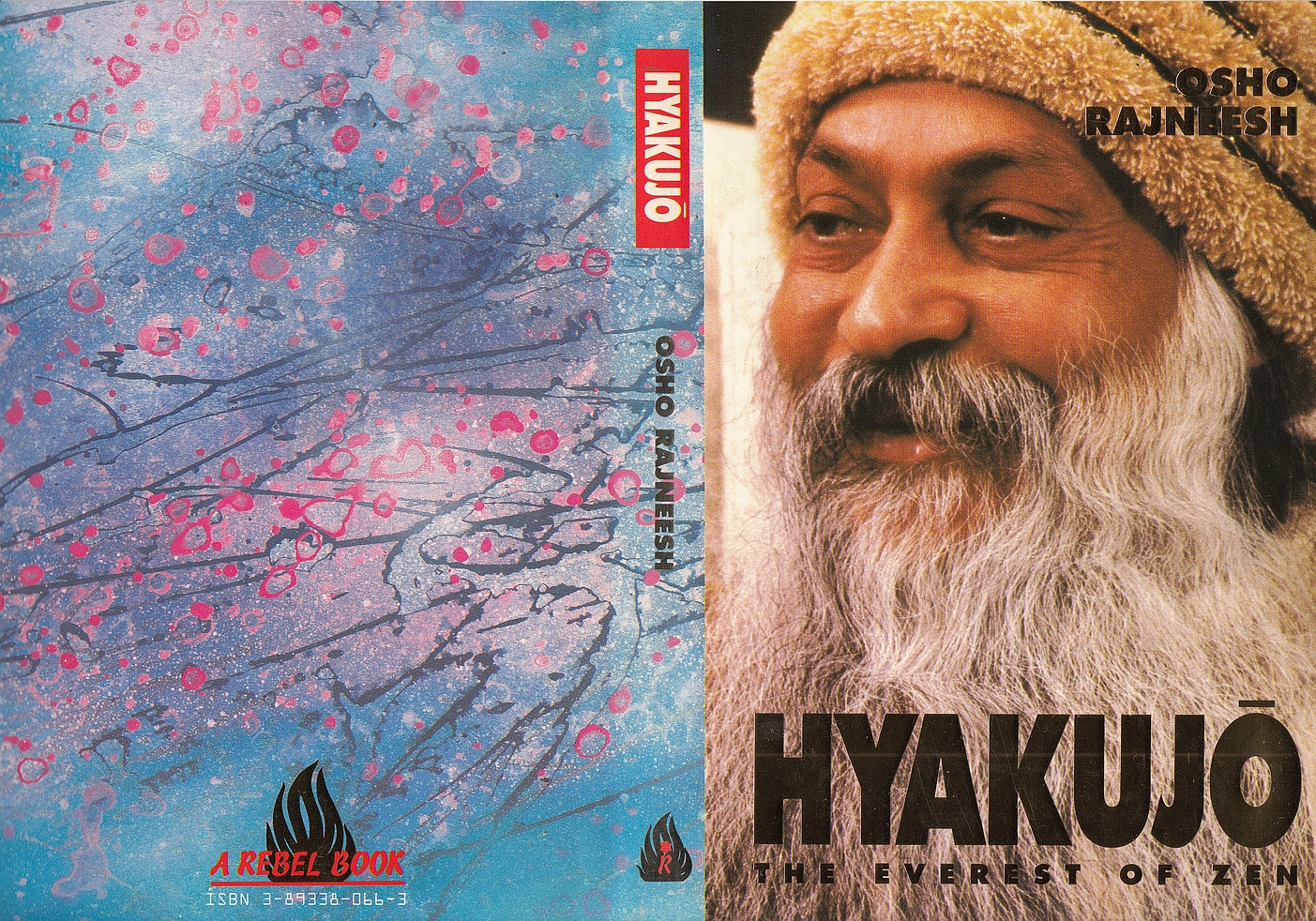
Hyakujo: The Everest of Zen, with Basho's Haikus
Discourses
Table of Contents
The language of suddenness
Hyakujo established the first Zen monasteries and taught sudden enlightenment. Preparation is gradual but illumination is sudden—existence believes in suddenness. Ma Tzu asked 'Where do you come from?' and 'What do you hope to gain?' The treasure house is your very own—that which asked the question. Hyakujo received great illumination. Ma Tzu's shout deafened him for three days. The language of suddenness: enlightenment doesn't come in steps.
The great pearl
Hyakujo: 'When hungry, I eat; when tired, I sleep.' Others think of a hundred things while eating, ponder a thousand while sleeping. He has no mental processes and no Tao to follow. The great pearl: Hyakujo's prose is direct; Basho's haikus supplement it with poetry. Where prose fails, poetry may succeed—poetry enters the heart, not the head. Basho's haikus are existential, not intellectual. Two great masters paired.
In search of a lost treasure
Not perceiving anything as existent or non-existent is true deliverance. Perception employed as concept is ignorance; perception that there is nothing to perceive is nirvana. Mind is the cause of all trouble—only no-mind can be at peace. In search of a lost treasure: the treasure is your own perception. Objects appear and disappear, but the nature of perception does neither. All senses share this eternal nature.
Lie down and witness
Hyakujo: 'I am no Zen adept. I have not a single thing to offer. Go and take a rest.' The moon reflected in the deep pond—catch it if you like. The Diamond Sutra: 'If someone says the Tathagata expounds the Dharma, he slanders the Buddha.' Who or what is the Tathagata? Lie down and witness—don't seek through outward appearance or sound. Scriptures are mere ink and paper; wisdom's function doesn't tumble in the void.
Don't be idiot buddhas
The monk heard the dinner drum, dropped his hoe, laughed, and went to eat. Hyakujo: 'Wonderful! This is the gate to Bodhisattva Kannon.' Don't be idiot buddhas—don't start smoking because Osho told Hasya not to struggle with quitting. Act intelligently. Scriptures are empty devices; clinging to the letter is tumbling in the void. Wisdom's mighty function operates beyond words.
The disciple is the seed
The Taoist asked: 'Is there anything more marvelous than the forces of nature?' Hyakujo: 'The power of comprehending those forces.' Tao is not cosmic vitality—they are not two. Wrong is the mind that attends to externals; right is the mind that brings externals under control. The disciple is the seed: listening without judgment prepares you for meditation. Tao is neither religion nor philosophy—pure understanding where everything disappears, including you.
The last milestone
Yun Kuang asked: 'Where will you be reborn?' Hyakujo: 'We have not died yet—what use discussing rebirth? That which knows birth is the unborn.' Not perceiving your nature doesn't mean you lack it—perception itself is that nature. The last milestone: mental processes produce phenomena; when they don't occur, phenomena have nothing to arise in. These dialogues are about your consciousness—without them, life is superficial. The dancer must disappear; only the dance remains.
What words cannot say...
Words and speech are concurrent causes—they are not mind. Like railway tracks running side by side but never meeting. Beyond words is the empty heart, real mind, no-mind. What words cannot say: mind is without form, neither beyond nor not beyond words. It is forever clear and still. The patriarch: 'It is only when mind is seen to be unreal that the Dharma of all minds can be truly understood.' Zen uses language symbolically—its prose is poetry.
The Buddha is your empty heart
Hyakujo's final test: 'With your mouth and lips closed, how would you say it?' Isan deferred to the master. Goho said 'Shut up!' Ungan asked 'Do you have them or not?' Hyakujo: 'My successors will be missing.' The Buddha is your empty heart—this is Hyakujo at his peak. Every master asks an unanswerable koan before transmitting the light. The question cannot be answered because truth is beyond words. The empty heart is the real successor.