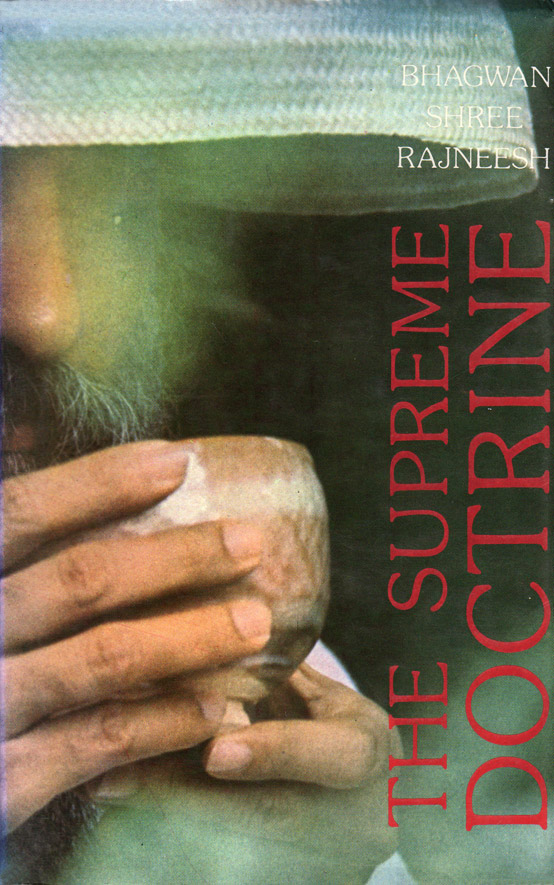
The Supreme Doctrine
Discourses
Table of Contents
Toward the Awakening
Toward the Awakening. The invocation—turning toward awakening. Toward the awakening: the Mundaka Upanishad begins with the seeker approaching the master. The supreme doctrine is not information but transformation. The awakening is not knowledge about—but direct knowing of—the self.
Transcending the Basic Duality of Sex
Transcending the Basic Duality of Sex. The first duality to transcend—sex, the root of all duality. Transcending the basic duality of sex: sex is the root duality—male/female, attraction/repulsion. The sage doesn't repress but transcends. Beyond sex, all dualities dissolve. The supreme doctrine begins where sex ends.
Surrender and I Will Transform You
Surrender and I Will Transform You. The master's promise—surrender brings transformation. Surrender and I will transform you: the master doesn't teach—he transforms. But the condition is surrender. The ego must step aside. Surrender is not defeat but the opening for grace. The supreme doctrine is transmitted through surrender.
The Unknowable Self
The Unknowable Self. The self cannot be known by the senses or mind. The unknowable self: the eyes cannot approach it, neither speech nor mind. It is different from the known and the unknown. The self is not an object of knowledge but the subject of all knowing. The supreme doctrine: the self is the knower, not the known.
It is Your Being
It is Your Being. The self is not something to find—it's your being. It is your being: the supreme doctrine doesn't give you a new self—it reveals what you already are. The self is not far—it's your being. You've been looking outward while being it all along. It is not attainment but recognition.
God Is Existence
God Is Existence. God is not a person—God is existence itself. God is existence: the Upanishad doesn't separate God from existence—God IS existence. Not a creator separate from creation. The supreme doctrine: the creator and creation are one. Existence is God's body.
Meditation and the Inner Eye
Meditation and the Inner Eye. The inner eye—opened through meditation. Meditation and the inner eye: the two outer eyes see the world; the inner eye sees the self. Meditation opens the inner eye. The supreme doctrine: without the inner eye, you're blind to your own being. Meditate and see.
Beginningless Beginning, Endless End
Beginningless Beginning, Endless End. The self has no beginning and no end. Beginningless beginning, endless end: the self is eternal—no start, no finish. The body begins and ends; the self doesn't. The supreme doctrine: you were never born and will never die. The beginningless is your beginning.
Death: The Climax of Life
Death: The Climax of Life. Death is not the end—it's the climax. Death: the climax of life: the worldly fear death; the sage sees it as life's climax. The supreme doctrine: death is the crescendo—not the opposite of life but its peak. Die rightly and death becomes the door.
The Eternal Play of Existence
The Eternal Play of Existence. Existence plays eternally—Leela. The eternal play of existence: the Upanishad sees existence as play (Leela)—not a serious drama but a joyful game. The sage participates in the play, knowing it's a play. The supreme doctrine: don't be serious—be playful.
Truth or Trick?
Truth or Trick? The mind tricks—truth is beyond tricks. Truth or trick? the mind is a trickster—it creates illusions. How to distinguish truth from tricks? The supreme doctrine: truth is what remains when all tricks are seen through. Don't trust the mind—trust awareness.
The Great Circle of Brahman
The Great Circle of Brahman. Brahman is a circle—no beginning, no end. The great circle of Brahman: existence is circular—not linear. Everything returns to its source. The sage moves in the circle of Brahman. The supreme doctrine: the circle is completeness—no part is missing.
Man Can Be Transcended
Man Can Be Transcended. Man is not the end—he can be transcended. Man can be transcended: the Upanishad says man is a bridge, not the end. Beyond man is the superman—the Buddha, the awakened one. The supreme doctrine: don't stop at man—transcend into the divine.
Knowing All Through the One
Knowing All Through the One. Know one thing and know all. Knowing all through the one: the Upanishad's secret—know the one (Brahman) and you know all. The many are in the one. The supreme doctrine: don't chase the many—find the one. In the one, the many are contained.
Now You Can Go
Now You Can Go. The master's final words—now you can go. Now you can go: the disciple is ready—the master releases him. Not dismissal but graduation. The supreme doctrine has been transmitted; the disciple is now a master. The lamp is lit—carry it.
The Great Dance of Suchness
The Great Dance of Suchness. The sage dances in suchness—Tathata. The great dance of suchness: the awakened one doesn't just know—he dances. Suchness (Tathata) is the state of total acceptance. The supreme doctrine culminates in the dance of suchness—everything as it is, celebrated.
Make Every Moment a Celebration
Make Every Moment a Celebration. The final teaching—celebrate every moment. Make every moment a celebration: the supreme doctrine's ultimate message—celebrate. Not just in meditation but in every moment. The sage is the ultimate celebrant. Life itself is the supreme doctrine—celebrate it.